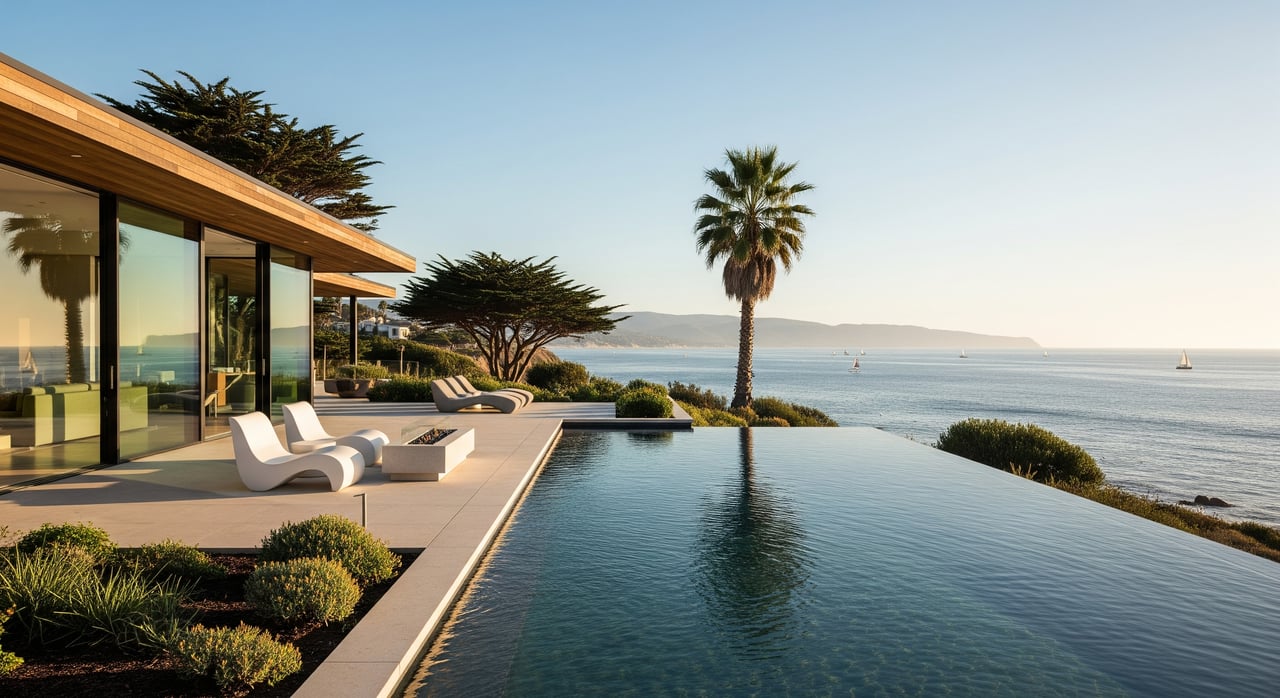
Are you wondering how much an ocean view really adds to a home’s price in Rancho Palos Verdes? You’re not alone. Views are a big reason people choose the peninsula, yet the premiums and tradeoffs are not always obvious. In this guide, you’ll learn how view quality, elevation, and orientation influence value, what tradeoffs to weigh, and how agents select comps to price a view home with confidence. Let’s dive in.
Why ocean views command premiums in RPV
Rancho Palos Verdes sits on cliffs and bluffs with steep terrain, which means view quality can change dramatically from one block to the next. Because wide, unobstructed ocean views are scarce and durable, many buyers are willing to pay a premium for them relative to similar homes without a view. The lifestyle benefits are real, from sunsets and natural light to the prestige of a coastline setting.
Across coastal markets, research commonly finds ocean view premiums in the range of roughly 8% to 30%. Exceptional panoramic positions can be higher in specific micro-markets. In RPV, local comps often show significant dollar differences between bluff-top panoramic homes and nearby properties with limited or no view. Your exact premium depends on the home, neighborhood price tier, and market conditions at the time you sell or buy.
Ocean view types that shape price
Not all views are equal. Appraisers and agents often classify view quality to make apples-to-apples comparisons.
Panoramic ocean view
This is the broad, continuous horizon with minimal obstruction, often capturing coastline or islands. When the view is visible from main living spaces and outdoor areas, it usually commands the highest premium.
Wide partial ocean view
Large portions of the ocean are visible, but some sightlines may be filtered by trees or adjacent homes. The premium is meaningful, though lower than full panoramic.
Peek or glimpse view
You might see a sliver of blue from certain rooms or angles. Buyers typically assign a smaller premium here.
Private view access
Views that are enjoyed from primary rooms and main outdoor living areas are worth more than views limited to secondary spaces such as corridors or lower-level rooms.
Recognizable features
Sightlines that include Catalina Island, coastline profiles, or visible city lights can increase perceived value compared to a generic water view.
Technical factors that move price
Several measurable characteristics influence how buyers value a view home in RPV.
- Line of sight from main spaces: Wide, unobstructed sightlines from your living room, kitchen, and primary outdoor areas carry more value than views from peripheral rooms.
- Elevation and obstruction risk: Higher elevation often improves breadth and reduces the chance of future blockage. Bluff-top parcels with a direct horizon line are especially prized.
- Orientation and sunsets: West or southwest exposure typically enhances sunset appeal and daylight quality in RPV. A north or inland orientation can reduce perceived value.
- Distance to water: Closer cliff or bluff locations often see higher premiums, although inland homes at the right elevation and angle can still offer compelling views.
- Permanence of the view: Overlooking protected open space or public land tends to be more secure than facing buildable lots where future construction could narrow sightlines.
Tradeoffs and ongoing costs to consider
View homes deliver special benefits, but the hillside setting and marine environment introduce considerations that affect net value.
Access and layout
- Stairs and multi-level living can be common on hillside lots. If you prefer single-level convenience or anticipate mobility needs, factor in potential adjustments or improvements.
- Steep driveways or limited parking access can reduce daily ease of use for some buyers.
Climate and exposure
- Wind exposure on ridges and bluffs can impact outdoor comfort and the wear of finishes and landscaping.
- Marine air accelerates corrosion on metal and some exterior materials, which can increase maintenance.
- Seasonal coastal fog can reduce view frequency at certain times of year.
Structural and regulatory
- Bluff or steep-slope sites may have geotechnical requirements, setback rules, and insurance considerations. Check local planning and hazard maps before you commit.
- Earthquake and coastal hazard factors can influence insurability and lender requirements.
Privacy and noise
- Elevated terraces can feel exposed to neighbors or nearby trails. Conversely, some elevated lots offer strong privacy. Evaluate each micro-location.
Maintenance and operations
- Expect more frequent repainting, metal replacement, deck upkeep, and drainage care. Homes with large glass areas might have higher HVAC use if shading is limited.
Pricing a view home: comp selection that works
To price a view accurately, lean on a disciplined comp approach. Start with the most similar view quality, then adjust for elevation, orientation, permanence, and standard home attributes.
Comp priorities
- Match view class and permanence. Compare panoramic with panoramic, partial with partial, and peek with peek, and verify that main living spaces and outdoor areas enjoy similar sightlines.
- Align elevation bands. Higher elevation can justify a premium, while lower elevation with restricted sightlines may warrant a discount.
- Compare outdoor usability. Decks, terraces, and yard spaces that capture the view matter.
- Match structure and condition. Floor area, bed and bath count, remodel level, and parking should be similar.
- Consider micro-location. Bluff-top, hillside, or coastal plain settings within the same neighborhood can vary in price.
- Adjust for sale date. Account for market movement between comp and subject property timelines.
Adjustment guidelines
These ranges illustrate how agents often adjust comp prices for view differences. Apply them to comparable sales as needed.
- View quality adjustments:
- Panoramic, unobstructed from primary rooms and outdoor areas: approximately +15% to +40%
- Wide partial ocean view: approximately +8% to +20%
- Peek or glimpse view: approximately +3% to +10%
- Elevation adjustments:
- Higher elevation with longer horizon and lower obstruction risk: approximately +5% to +12%
- Lower elevation with more restricted sightlines: approximately −3% to −10%
- Orientation premium:
- West or southwest facing for sunsets: approximately +2% to +8%
- Tradeoff discounts:
- Significant stairs or limited main-level access: approximately −3% to −10%
- Persistent wind exposure that limits outdoor use: approximately −2% to −6%
- Near-term exterior repairs for corrosion or deckwork: subtract estimated costs or approximately −3% to −8%
- Permanence adjustments:
- Protected view corridor or adjacent open space: approximately +3% to +10%
- High risk of obstruction from developable lots: approximately −5% to −15%
Sample pricing bands
These examples are illustrative only. Always calibrate to recent RPV sold comps.
- Mid 1 million neighborhood example:
- No view comparable: about $1.2M
- Peek view: about $1.26M to $1.32M
- Partial view: about $1.3M to $1.44M
- Panoramic bluff-top: about $1.5M to $1.68M
- Premium bluff neighborhood example in the mid 2 million range:
- No view comparable: about $2.0M
- Peek view: about $2.06M to $2.2M
- Partial wide view: about $2.16M to $2.4M
- Full panoramic with islands or coastline: about $2.5M to $2.8M
Buyer checklist for evaluating a view
Use this quick plan to confirm value and fit.
- Visit at multiple times and conditions. Check sunrise, sunset, clear days, and foggy periods to gauge view frequency and wind.
- Verify permanence. Ask about neighboring parcels, tree growth, and pending permits that could affect sightlines.
- Inspect outdoor usability. Look for wind breaks, sheltered seating, and how livable decks and terraces feel.
- Assess maintenance. Check for corrosion on metalwork, deck condition, drainage, and finishes near the coast.
- Consider access and lifestyle. Evaluate stairs, driveway slope, and how the layout aligns with your daily routine.
- Review hazards and requirements. For bluff or steep-slope parcels, request geotechnical documentation and understand setbacks and insurance considerations.
Seller playbook to maximize your view premium
Small, targeted improvements and strong presentation can increase perceived value and support your asking price.
- Lead with sightlines. Stage main living areas and outdoor spaces to frame the view. Capture professional photos and golden-hour drone imagery.
- Improve usability. Add subtle wind screens, comfortable seating, or shade elements that make outdoor spaces more inviting.
- Document permanence. Provide any relevant easements, notes on protected open space nearby, or city records that support view security.
- Price with precision. Use view-matched comps and apply adjustments for elevation and orientation. Clarify tradeoffs so buyers understand value.
- Present with polish. A modern listing package with virtual tours and high-quality media helps buyers emotionally connect with the view.
When premiums expand or compress
Market conditions influence how much extra buyers will pay for a view. In hotter markets with limited inventory, buyers often compete more aggressively for scarce panoramic homes. In slower markets or when rates rise, premiums can compress as buyers focus more on price and function. Always anchor your strategy in the most recent, local sold comps and state your assumptions when discussing premiums.
Work with a local advisor you trust
Ocean view pricing in Rancho Palos Verdes is part art and part science. The right strategy blends view classification, comp discipline, and a clear plan for tradeoffs and maintenance. If you are considering buying or selling a view home, get tailored guidance and a data-backed pricing plan. Connect with Janet Chen for a personalized consultation and free home valuation. Bilingual support in English and Chinese is available.
FAQs
How much do ocean views add to RPV home prices?
- Research commonly shows premiums around 8% to 30% depending on view quality, with exceptional panoramic settings sometimes higher in specific micro-markets.
What factors most increase a view home’s value in RPV?
- Panoramic sightlines from primary rooms, higher elevation, west or southwest orientation for sunsets, recognizable features like Catalina, and low obstruction risk all add value.
How should I choose comps for a view home in RPV?
- Prioritize comps with similar view class and permanence, then align elevation, outdoor usability, condition, and micro-location, and adjust for sale date.
What tradeoffs might reduce the premium on a view property?
- Stairs, steep driveways, wind exposure, marine corrosion and maintenance, privacy considerations, and slope or bluff-related requirements can reduce net value.
How can sellers maximize a view premium before listing?
- Stage to highlight sightlines, capture high-quality media, improve outdoor usability, document view permanence, and price using view-matched comps with clear adjustments.