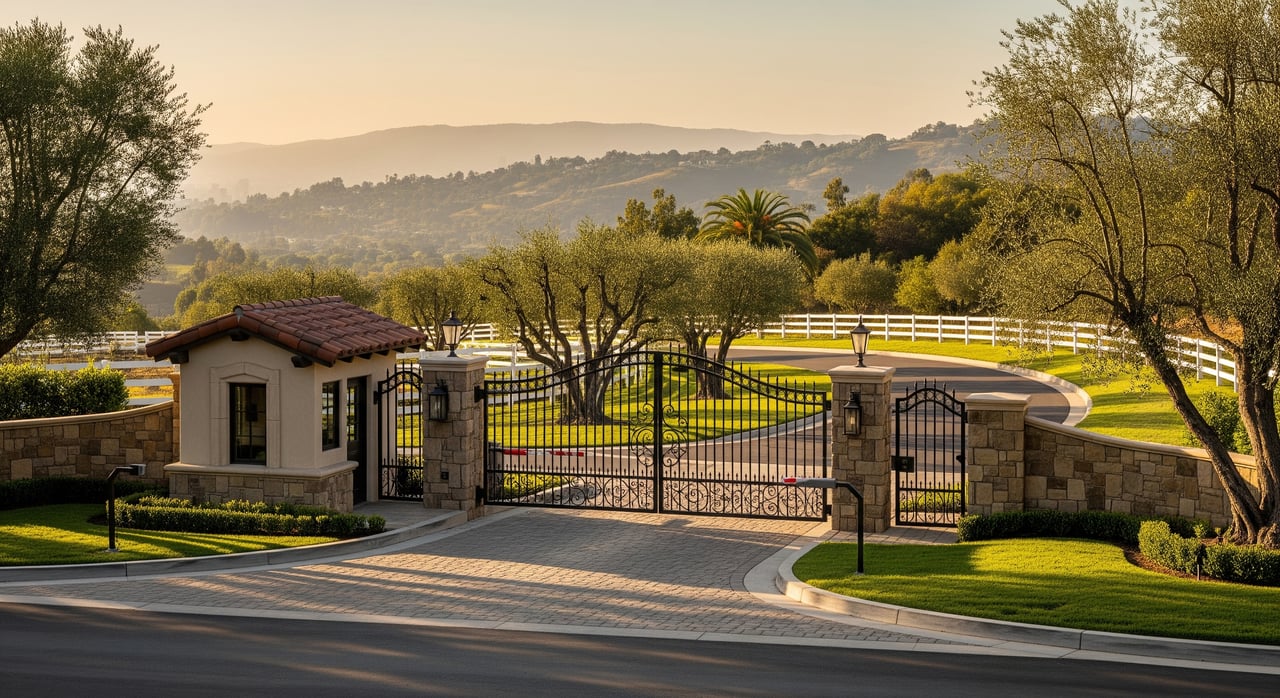
Looking at Rolling Hills for its privacy, acreage, or equestrian lifestyle, but not sure how gate access, approvals, and fees actually work? You’re not alone. Buying inside this privately gated city on the Palos Verdes Peninsula follows a slightly different playbook than a typical suburban purchase. In this guide, you’ll learn the entry logistics, what to review in escrow, realistic costs, and a clear due diligence checklist so you can move forward with confidence. Let’s dive in.
Why Rolling Hills stands out
Rolling Hills is an incorporated, privately gated community known for large lots, private roads, and a rural feel with access to riding trails. Many properties are zoned for horse keeping and include barns, paddocks, and arenas. Buyers choose it for privacy and space, scenic views, and low‑density zoning.
Because the streets and gates are privately maintained, you can expect extra logistics compared to a public neighborhood. You will also see stricter architectural and equestrian rules, plus added time for specialty inspections. Early planning helps keep your purchase smooth.
How buying in a gated city works
Gate access for showings
Showing access is controlled. Depending on the property, you may encounter temporary gate codes, timed passes, or preregistration with names and vehicle details 24 to 72 hours in advance. Some gates require visitors to be escorted from the entrance onto private streets. Large vehicles and moving trucks may need advance scheduling.
Before you book a tour, confirm procedures with the listing agent. Ask who issues access, how much lead time is needed, and who to call if a gate code fails. If you are touring multiple homes across the Peninsula, group appointments back to back to avoid repeated gate paperwork.
Open house policies
Some gated communities limit or prohibit open houses without advance approval. Expect a more controlled experience focused on private showings. Your agent can coordinate with the listing side to follow any security or visitor rules.
Escrow documentation and approvals
Title review should confirm private road easements, gate maintenance agreements, any reciprocal access rights, and recorded CC&Rs. If the property is in an association or subject to private covenants, the seller will provide the document package. In some cases, a community architectural review board may oversee exterior changes. Confirm if there are pending approvals or open violations.
What to review from the association
Core documents to request early
Ask for these at the offer stage if the property is subject to CC&Rs or an association:
- CC&Rs, Bylaws, and Rules and Regulations
- Current year budget, reserve study, and recent financials
- Board meeting minutes for the last 6 to 12 months and any litigation disclosures
- Estoppel or resale certificate listing fees, assessments, and delinquencies
- Architectural and design guidelines, including equestrian rules
- Gate and private road maintenance agreements and insurance requirements
Equestrian and fencing rules that matter
If horses are part of your plan, verify animal limits, permitted barn and stable structures, paddock and pasture use, and any manure management requirements. Check setbacks, fence height and style, arena rules, lighting limits, and whether commercial boarding or lessons are allowed. Review runoff, erosion, and vector control requirements to align with county health and fire rules. Understand Architectural Review Board timelines for new barns, fences, or major exterior work.
Your review window and fees
California law provides for delivery of association resale documents and typically gives you a statutory period to review and potentially rescind after receiving them. The exact window appears on the resale or estoppel certificate. Associations can charge resale and transfer fees, which are usually assigned to buyer or seller per escrow practice and community rules.
Costs to plan for
Price ranges vary by property and association, but these planning estimates will help you budget:
Gate and access fees
- Temporary gate passes or codes: typically nominal, sometimes up to about $200
- Move‑in or move‑out deposits for trucks: about $250 to $1,500 and often refundable
Association documents and transfer
- Estoppel or resale certificate: commonly $150 to $500
- Transfer or processing fees: about $100 to $1,000
- Ongoing dues: vary widely by property and may be periodic or assessment‑based
Specialty inspections and consultants
- Equine facility inspection for barns, stalls, fencing, arena drainage: about $300 to $1,200
- Structural review for large outbuildings or arenas: scope‑dependent
- Geotechnical or soil study for slopes or new construction: about $1,500 and up to $5,000 or more
- Septic inspection or percolation test if not on sewer: about $500 to $2,000
- Well and water‑quality testing if applicable: about $150 to $500
- Environmental or erosion review near open space: scope‑dependent
Permits and improvements
Fence, barn, stable, septic, well, grading, and drainage work typically require permits with costs ranging from several hundred dollars to several thousand dollars depending on scope.
Title and escrow
Title insurance is standard. Ask your title company about endorsements that address private road maintenance and access rights. Overall escrow fees and timelines are similar to Los Angeles County luxury transactions, with extra time if there are complex title or association issues.
Timeline at a glance
- Showings and offer: 1 to 7 days depending on gate procedures and access lead times
- Offer acceptance to open escrow: 1 to 3 days
- Due diligence period:
- HOA document review: follow the statutory window on the resale certificate, often several days to a week
- General inspections: usually 7 to 14 days
- Specialty inspections such as barns, geotechnical, and septic: schedule early and allow 7 to 21 days
- Loan and appraisal: often 10 to 21 days, running alongside inspections
- Typical closing: 30 to 45 days from opening escrow, longer if there are estate, title, or parcel complexities
Due diligence checklist
- Confirm gate procedures and lead times with the listing agent before your first showing
- Request CC&Rs, bylaws, rules, minutes, budget, reserve study, and the estoppel or resale certificate as early as possible
- Order standard home inspections and equine facility inspections during the first week of escrow
- Confirm whether the property is on sewer or septic and order a septic inspection or percolation test if needed
- Review title for private road easements, reciprocal access, and conservation or trail easements
- Verify fence rules, permitted heights, and materials with the association and local building departments
- Check wildfire and brush‑clearance requirements for homes and barns and confirm defensible space plans
- Confirm that your intended equestrian uses are permitted under association rules and local ordinances
- Ask about recent or upcoming assessments for gates, roads, irrigation, or reserve projects
Permits, restrictions, and local hazards to verify
- Building permits for barns, major fences, arenas, grading, and retaining walls
- Fire department defensible space and brush‑clearance requirements, including for hay and livestock structures
- Septic and well capacity and compliance if the property is not on sewer
- Erosion, drainage, and slope stability; consider a geotechnical review for hillside lots
- Conservation or trail easements that may limit development or require trail access
For authoritative guidance, coordinate early with the City of Rolling Hills, Los Angeles County departments for building, grading, septic, and public health, and the Los Angeles County Fire Department. If a property borders conserved open space or trails, the Palos Verdes Peninsula Land Conservancy is a helpful resource for understanding easements and access.
Questions to ask your team
- Who issues gate access and how far in advance do guests, showings, and movers need to be scheduled?
- Is the property subject to CC&Rs or an association and when will the full document packet and estoppel be delivered?
- Are there any pending assessments, special projects, or litigation related to gates, roads, or common areas?
- Which equestrian improvements and fences were permitted and finaled and are there open permits?
- Are there private road maintenance agreements or special tax assessments tied to the parcel?
- What are the documented rules for number of horses, lighting, arena use, and any commercial equestrian activity?
- Has the fire department required any recent brush or defensible space work and is it current?
- Are there recorded conservation or open‑space easements on or adjacent to the property?
How we help you buy in Rolling Hills
You deserve a calm, knowledgeable partner when navigating a gated city purchase. Our team combines deep Palos Verdes expertise with high‑touch service to handle gate logistics, coordinate specialty inspections, and keep your escrow moving on time. If you prefer bilingual support, we provide guidance in English and Chinese.
If Rolling Hills is on your short list for privacy, acreage, or equestrian amenities, let’s create a plan that fits your goals and timeline. Connect with Janet Chen for a personalized consultation.
FAQs
What makes Rolling Hills different from nearby neighborhoods?
- It is an incorporated, privately gated community with large lots, private roads, and a rural setting. Many properties allow horse keeping and have access to riding trails.
How does gate access affect showings and moving?
- Access is controlled and may require preregistration, temporary codes, escorts, and scheduled hours for large vehicles. Confirm procedures and lead times with the listing agent early.
Which documents should I review if there is an association?
- Ask for CC&Rs, bylaws, rules, minutes, budget, reserve study, estoppel or resale certificate, architectural guidelines, and any gate or private‑road maintenance agreements.
What extra inspections should equestrian buyers consider?
- In addition to a general home inspection, consider an equine facility review, structural assessment for outbuildings, geotechnical study for slopes, septic testing if applicable, and water‑quality testing for wells.
What costs are unique to gated communities like Rolling Hills?
- Plan for potential gate access fees, move‑in deposits, association resale or transfer fees, specialty inspections, and permits for barns, fencing, grading, and drainage work.
How long does a typical Rolling Hills purchase take?
- Standard closings run about 30 to 45 days from opening escrow. Build in extra time for association document review and any specialized inspections or title items related to private roads and easements.