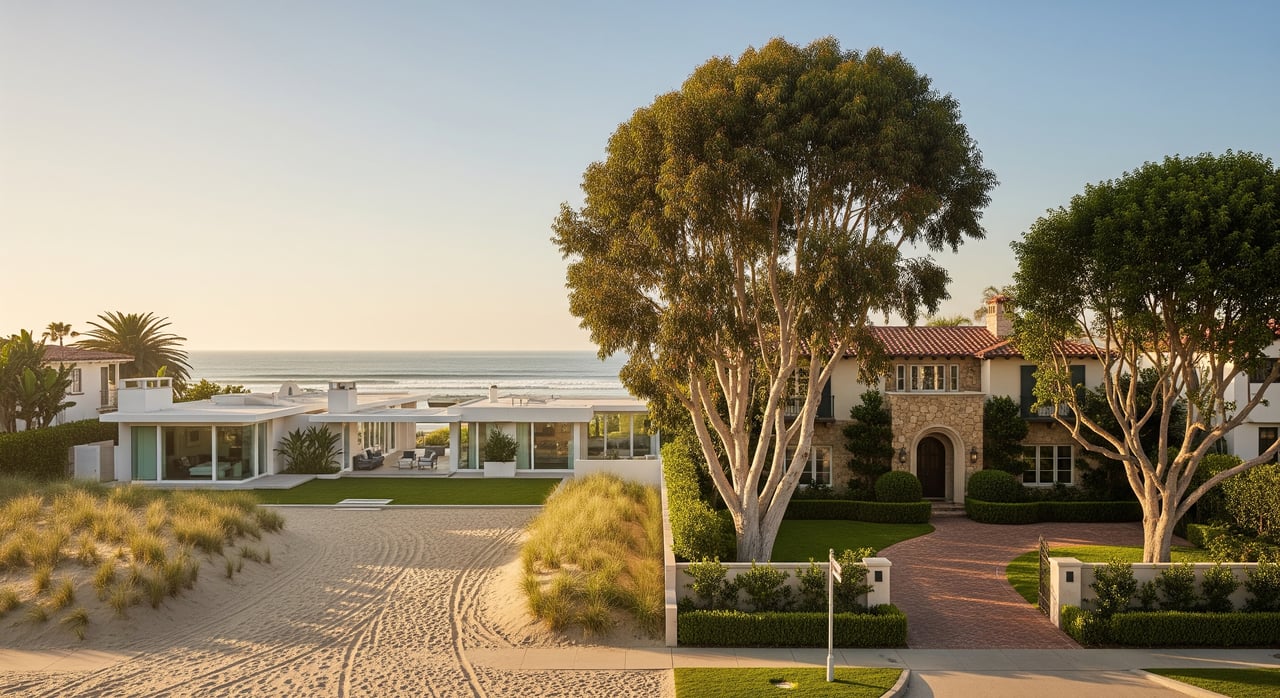
Standing on a Manhattan Beach block, it can feel like every home has a different footprint and yard. If you are comparing the Sand Section with the Tree Section, you are really choosing between two ways of living. Each area offers a distinct mix of lot size, setbacks, and outdoor space that affects how you design, remodel, and enjoy your home. In this guide, you will learn how lot patterns and rules shape floor plans, what outdoor spaces are typical, and how to plan your next move with confidence. Let’s dive in.
Sand vs Tree Overview
The Sand Section sits closest to the ocean and Strand. You get short walks to the beach, coastal views on select blocks, and a lifestyle centered around sun and surf. Homes often sit on smaller parcels, so many designs go vertical or use rooftop decks to capture light and views.
The Tree Section is set a bit inland with tree-lined streets and wider parcels. You typically see larger lots, more private yards, and room for broader floor plans. Many buyers value the extra space for flexible living, outdoor projects, and privacy.
Block-by-block variation matters in both areas. Some streets break the pattern with corner lots, consolidated parcels, or unique shapes. Always check the exact parcel before making assumptions about size or potential.
Lot Size Patterns
Sand Section lot traits
Smaller, more compact lots are common in the Sand Section. Many parcels fall in the low-thousands of square feet, often under about 5,000 square feet. Frontages can be narrower, commonly around 30 to 50 feet in many beach neighborhoods. The result is tighter side yards and a focus on vertical living and rooftop outdoor rooms.
Lot shapes often run narrow and deep. That shape favors two-story layouts, stacked rooms, and efficient circulation. Garages might be narrower or tandem, which can drive the placement of entry and living spaces.
Tree Section lot traits
Tree Section parcels are generally larger, many in the mid-thousands up through roughly 8,000-plus square feet. Frontage often runs from about 50 to 75-plus feet across many blocks, which opens up wider floor plates and side yards. Deep, rectangular lots enable generous backyards.
The wider geometry supports single-level or more sprawling plans, with options for side-loaded garages, multiple living areas, or dedicated office spaces. Private rear yards are more common and often support project ideas like patios, gardens, or pools.
Corner and unique parcels
Corner lots often bring larger setback needs along the street side, but they can improve access and garage placement. Some parcels are non-standard due to older subdivisions or lot consolidations. These can unlock different build opportunities, but they require extra due diligence on setbacks and recorded lot lines.
Zoning and Setbacks
Local rules shape what you can build as much as the land itself. In Manhattan Beach, zoning designations outline permitted uses and minimums, while setbacks define where a home can sit on the lot. Floor area limits and lot coverage rules cap how much interior area and footprint you can add.
Height and story limits control rooflines and may affect rooftop deck options. Parking requirements can also consume valuable space on smaller lots. For coastal parcels, additional rules or permits may apply to protect access, views, and resources.
Accessory Dwelling Units are supported by California law, but feasibility still depends on setbacks, parking, and utilities on your specific parcel. In the Tree Section, tree regulations can affect grading, excavation, or removal plans. The best approach is to verify your exact lot and speak with the Planning Department before committing to a design.
Floor Plan Impacts
Vertical planning in the Sand Section
On smaller or narrower lots, you will often see multi-level homes that stack living spaces. Bedrooms may sit on upper floors to capture light or views, while main living areas connect to balconies, terraces, or rooftop decks. Circulation is designed to be efficient, with fewer hallways and more open-plan layouts.
Garages can set the tone for the first floor. Tandem or narrow garages may lead to creative entries and storage solutions. The goal is to maximize usable square footage within floor area rules and setbacks.
Wider plans in the Tree Section
Larger frontages allow broader main levels and more flexible room adjacencies. You can design separate zones for living, dining, and family space without feeling squeezed. It is easier to incorporate elements like a mudroom, pantry, or office on the main level.
Single-level living is more achievable. With room to expand laterally, you can create long sightlines and indoor-outdoor transitions that open to a private backyard. Side yards offer bonus light and cross ventilation.
Outdoor Space Options
Sand Section outdoor living
Private yard space is often limited, so outdoor life tends to center on rooftop decks, front porches, and narrow side courtyards. Small terraces can extend living rooms, while pocket gardens soften entries and side yards. Public amenities like the Strand and nearby parks often supplement private outdoor areas.
Tree Section outdoor living
Roomier backyards support pools, larger patios, and more varied landscaping. Detached ADUs may fit behind a primary home, subject to local rules. Mature trees can create a calm, shaded environment for relaxation and play.
Remodel and Expansion
Small-lot strategies
If you own or are buying in the Sand Section, plan for vertical solutions. Interior reconfiguration, smarter storage, and rooftop decks can deliver more livable space within a modest footprint. Adding levels or partial additions may be possible within height and floor area limits.
Logistics can be more complex on tight lots. Construction staging, access, and foundation work can increase costs and timelines. Expect careful planning to maintain neighbor access and comply with parking rules.
Large-lot strategies
Tree Section properties often support lateral additions, outdoor projects, and detached structures. You might add a larger kitchen, a new family room, or an ADU if setbacks and utilities line up. Pools and covered patios fit more naturally within a wide backyard.
Because the lots are bigger, it can be easier to meet parking and setback rules while still achieving a comfortable floor plan. That flexibility can simplify both design and permitting.
Costs, risks, and timing
On small coastal parcels, construction can be more specialized due to tight access, shoring, and salt exposure. Coastal proximity can raise maintenance and insurance considerations. Design review, character considerations, or neighborhood precedents may affect how a plan evolves.
Across both sections, unrecorded easements, utility corridors, and site-specific restraints can reduce the buildable area. Early investigation is key to avoid costly mid-project changes.
Value Tradeoffs
Price-per-foot dynamics
Proximity to the ocean typically commands a premium. Sand Section homes often trade at higher prices per square foot because of location and, on select sites, views. The tradeoff is that many lots are smaller with tighter private outdoor areas.
In the Tree Section, larger lots and more usable outdoor space often attract buyers who prioritize privacy and room to grow. Price per lot or total property value can vary by block, even within the same general area. Yard size and flexibility broaden the appeal to a wider set of buyers.
Resale and audience fit
Homes near the beach can command strong prices but may appeal to a more specific buyer who values coastal access over yard size. Larger parcels with flexible floor plans can draw buyers looking for space, especially those planning expansions or outdoor projects.
Your long-term plan matters. If you anticipate adding an ADU or pool, or you want single-level living, the Tree Section may offer more practical options. If being near the sand and surf is your top priority, a smaller lot with a vertical plan can still deliver a great lifestyle.
Buyer and Seller Checklist
- Confirm exact lot dimensions and zoning through official parcel maps and the Planning Department. Do not rely on broad neighborhood labels.
- Order a preliminary title report and a property survey early to verify boundaries and any easements.
- Run a feasibility check on setbacks, floor area limits, height rules, parking, and ADU standards for your specific parcel.
- If you are near the shoreline, verify whether any coastal development rules or permits apply to your project.
- In the Tree Section, check for street tree or protected tree regulations before planning excavation or removal.
- Review nearby permit records to see what the city has recently approved on your block.
- Budget for higher design and construction complexity in the Sand Section, including staging and potential coastal exposure considerations.
Work With a Local Advisor
Choosing between the Sand and Tree Sections comes down to how you want to live. If you are drawn to the beach and can optimize vertical space, the Sand Section delivers a one-of-a-kind coastal lifestyle. If you want room to grow indoors and out, the Tree Section offers the lot depth and width to support it.
If you would like a block-by-block assessment of a property or help exploring remodel options, connect with a local advisor who understands South Bay neighborhoods and permitting paths. For warm, client-first guidance in English or Chinese, reach out to Janet Chen for a personalized consultation and a free home valuation.
FAQs
What are typical Sand Section lot sizes in Manhattan Beach?
- Many parcels are in the low-thousands of square feet, often under about 5,000 square feet, with narrower frontages common in beach blocks.
What are common Tree Section lot sizes and widths?
- Lots are generally larger, often in the mid-thousands up through roughly 8,000-plus square feet, with frontage often around 50 to 75-plus feet on many blocks.
How do setbacks and floor area limits affect design?
- Setbacks reduce the buildable footprint, and floor area limits cap total interior size, which pushes Sand Section homes vertical and allows wider plans in the Tree Section.
Can I add an ADU on a Tree Section lot?
- ADU feasibility depends on setbacks, parking, and utilities on your specific parcel; larger lots often have more flexibility, but you must verify with the city.
Are rooftop decks typical near the beach?
- Rooftop decks are a common way to gain outdoor space on smaller coastal lots, but they must meet height and design rules for the parcel and neighborhood.
What permits should I expect near the coast?
- Projects near the shoreline may need additional coastal review or permits; always confirm thresholds and requirements with the Planning Department early.