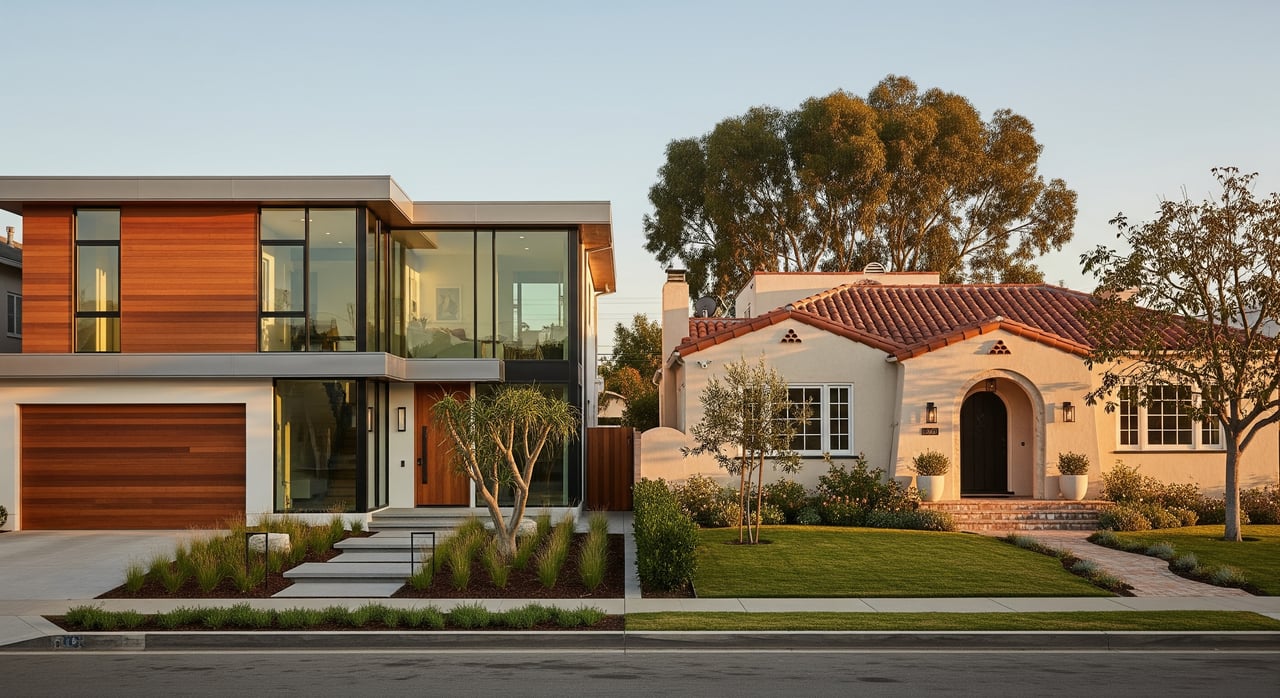
Are you weighing a sleek new build against the charm of an older Torrance home? You are not alone. Many South Bay buyers face this exact decision as they balance budget, maintenance, energy costs, and neighborhood feel. In this guide, you will get a clear side-by-side view, a simple decision framework, and an easy 5-year cost template to help you pick the right fit for your lifestyle and finances. Let’s dive in.
How Torrance inventory shapes your choice
Torrance is a mature South Bay city, with much of its housing stock built in the postwar decades through the 1960s and 1970s. That means most options you tour will be older homes rather than large new subdivisions.
New construction does exist but is relatively limited. You will mostly see infill projects, small-lot detached homes, accessory dwelling units, and townhome or condo communities. This scarcity impacts price, availability, and your search timeline.
Across subareas like North, West, and South Torrance, you will find differences in lot size, walkability, access to parks, and proximity to main roads. Understanding these neighborhood dynamics will help you compare not just the home itself but the daily life that comes with it.
New build vs older: quick comparison
- New build advantages: lower near-term maintenance, modern systems and layouts, energy-code compliance, potential builder warranties.
- New build tradeoffs: price premiums in constrained markets, limited inventory, smaller or less mature landscaping in infill settings, possible HOA dues.
- Older home advantages: established neighborhoods and tree canopy, larger lots in some areas, potential for value through renovation, typically no HOA for single-family.
- Older home tradeoffs: higher and more variable maintenance, possible seismic and system upgrades, older floorplans unless remodeled.
Price and purchase economics in Torrance
New builds in coastal and near-coastal markets often command a premium per square foot due to scarcity and modern features. In Torrance, inventory and demand can widen or narrow that gap. Older homes in highly desirable pockets may match or exceed the price of newer builds, especially if they sit on larger lots or have been updated.
Builders may offer incentives like closing cost credits, rate buydowns, or upgrade allowances. Negotiation dynamics differ from resale transactions. With older homes, you might negotiate on price, repair credits, or timing, though multiple offers are common in tight inventory.
Maintenance and repair expectations
New construction typically brings lower near-term maintenance. You start with a new roof, systems, and appliances, and many items carry builder or manufacturer warranties. As a general guideline, new owners often budget below 1 percent of the purchase price for the first several years.
Older homes carry more maintenance variability. Roof, HVAC, plumbing, electrical, foundation and seismic needs, and termite or pest work can add up. A common rule of thumb is 1 to 3 percent of home value per year for maintenance and repairs, with older homes often at the higher end. Actual costs depend on age, condition, and recent upgrades.
Energy and utility costs
New builds must comply with California Title 24 energy standards and CALGreen at the time of permit. You can expect better insulation, double-pane windows, efficient heating and cooling, and tight building envelopes. Many newer homes also include EV readiness and solar prewiring, which can lower upgrade costs later.
Older homes vary widely. Some may already have upgraded windows and HVAC. Others benefit from targeted improvements like insulation, duct sealing, and energy-efficient lighting. Reviewing utility bills and completing an energy assessment can help you estimate savings opportunities.
Insurance, property taxes, and ongoing fees
In California, property tax assessments reset at purchase. Whether you buy new construction or an older home, your taxes reflect the purchase price at closing. Be mindful that older neighbors might have lower taxes due to long-term ownership.
Homeowners insurance for new construction may be lower initially thanks to newer systems and materials. Location and replacement cost still drive rates. Earthquake insurance is a separate consideration in Southern California. Premiums differ by construction type, retrofit status, and coverage limits.
HOA dues are common in many new subdivisions and condo communities. Dues typically cover exterior maintenance and common-area insurance. Most older single-family homes in Torrance do not have an HOA, though there are exceptions. Add dues to your monthly budget when comparing options.
Neighborhood character and resale
Established Torrance neighborhoods often offer mature landscaping, familiar school boundaries, and convenient access to local parks and retail. Many buyers prefer the feel and lot sizes of these areas. The tradeoff can be older infrastructure, older floorplans, or proximity to busier streets in certain pockets.
New infill homes tend to feature open layouts, larger kitchens, en-suite bedrooms, and higher ceilings. Landscaping is newer and neighborhood character is still forming. If you value modern design and convenience, this can be appealing.
Resale value is driven more by location, lot size, and market conditions than by age alone. Newer homes that align with current buyer preferences can sell at a premium. Well-renovated older homes on desirable lots can appreciate strongly as well. Consider the cost of updates to keep an older home competitive over time.
Financing and appraisal differences
Financing new builds can involve builder incentives or special timelines. Appraisals sometimes trail list prices when comparable new sales are scarce. For older homes, your lender may require additional inspections if there are signs of major issues.
If you plan to renovate, look into loan programs that wrap improvement costs into the mortgage. Timelines, terms, and availability vary, so consult local lenders early in your search.
Remodeling, permits, and hidden costs in Torrance
Older homes can reveal surprises once you open walls. Potential items include asbestos, lead paint, outdated electrical, unpermitted additions, or foundation and seismic retrofit needs. Build a contingency into your budget and plan to verify permits.
New builds usually come with complete documentation, including final permits and a certificate of occupancy. Still, confirm that all features were inspected and finalized. In infill settings, city review and permitting can take time, so make sure schedules and occupancy dates are clear.
A simple decision framework
Use this step-by-step outline to clarify your best fit:
- Define your priorities
- Must-haves: bedrooms, garage or parking, yard size, single-story or two-story, commute access.
- Preferences: low maintenance, energy efficiency, historical character, larger lot, established landscaping.
- Map your budget over 5 to 10 years
- Upfront costs: price, closing costs, immediate renovations, and HOA move-in fees.
- Ongoing costs: mortgage, property taxes, insurance, earthquake coverage, HOA dues, utilities, and maintenance reserves.
- Pinpoint location factors
- Street setting, tree cover, privacy, noise, and access to parks, shopping, and transit.
- School boundaries and commute routes relevant to your daily routine.
- Verify condition and documentation
- Older homes: full home inspection, pest and termite inspection, sewer scope when appropriate, and a structural or seismic review if you suspect foundation issues.
- New builds: confirm builder warranty terms for workmanship and structural coverage, plus appliance and system warranties. Request copies of final permits and the certificate of occupancy.
- Compare total cost vs lifestyle
- If you want low maintenance and modern systems and accept a potential price premium or HOA dues, a new build may fit.
- If you prefer an established neighborhood or larger lot and are comfortable managing projects, an older home may be a better match.
- Plan your exit strategy
- Consider your timeframe. If you expect to move in 3 to 7 years, low maintenance and broad buyer appeal can help. For a longer horizon, lot, location, and flexibility to improve may matter more.
5-year total cost of ownership - made simple
Here is a straightforward way to estimate and compare costs for two homes.
Include these components each year:
- Mortgage principal and interest
- Property taxes
- Homeowners insurance
- Earthquake insurance
- HOA dues, if any
- Utilities for electricity, gas, water, and trash
- Maintenance and repairs reserve
- Annualized major replacements like roof, HVAC, or windows
- Renovation budget, either upfront or spread out
A simple formula for each year:
- Annual cost = mortgage (principal and interest) + property tax + insurance + HOA + utilities + maintenance reserve + annualized replacements + other fees
- 5-year TCO = sum of annual costs for years 1 through 5 + one-time costs like immediate renovations and lender fees
Hypothetical example for illustration only
Scenario A - New build
- Purchase price: $900,000
- Annual maintenance reserve: 0.5 percent of price = $4,500
- Estimated annual utilities: $3,000
- Property tax estimate: about 1.1 percent of price = $9,900
- Homeowners insurance: $1,200 per year
Scenario B - Older home
- Purchase price: $850,000
- Annual maintenance reserve: 2.0 percent of price = $17,000
- Estimated annual utilities: $4,200
- Property tax estimate: about 1.1 percent of price = $9,350
- Homeowners insurance: $1,500 per year
- Immediate renovation: $30,000 in year 1
First-year recurring costs comparison, excluding mortgage payments:
- New build: $9,900 + $1,200 + $3,000 + $4,500 = $18,600
- Older home: $9,350 + $1,500 + $4,200 + $17,000 = $32,050, plus $30,000 in year 1 renovations = $62,050
These figures are only examples. Use your lender quote for mortgage payments, confirm your tax rate at purchase, request actual utility bills for older homes, and review HOA budgets for applicable communities.
Which Torrance option fits you
Choose a new build if you prioritize minimal near-term maintenance, modern floorplans, energy code compliance, and EV or solar readiness. Expect to pay a premium, and include HOA dues if you are looking at a community with shared amenities.
Choose an older home if you want an established neighborhood, potential for larger lots, and the chance to add value with targeted upgrades. Plan for higher and less predictable maintenance, and budget for seismic and system improvements where needed.
Both paths can be smart in Torrance. The right choice comes from your 5 to 10 year plan, the location that best supports your daily life, and a clear-eyed view of total cost.
Ready to compare real listings with a side-by-side TCO? Reach out for local guidance, bilingual support, and a calm, data-informed process. Connect with Janet Chen for a personalized consultation.
FAQs
How do Torrance home prices compare for new vs older homes?
- New builds often carry a price premium due to scarcity and modern features, while older homes in desirable pockets can match or exceed those prices based on lot size, location, and updates.
What maintenance budget should I plan for an older Torrance home?
- A common guideline is 1 to 3 percent of home value per year, with older or less updated homes at the higher end, adjusted by inspection findings and recent upgrades.
Do new builds in Torrance lower utility bills meaningfully?
- New construction must meet current energy codes, which can reduce energy use compared with many older homes. Savings vary based on home size, systems, and occupant behavior.
How will property taxes change when I buy in California?
- Your assessed value resets to the purchase price at closing, which sets your property tax going forward. This applies to both new construction and older homes.
What should I verify before closing on a new build in Torrance?
- Confirm the builder warranty scope, appliance and system warranties, final permits, and the certificate of occupancy. Clarify HOA dues, budgets, and any move-in fees if applicable.
What inspections are most important for older Torrance homes?
- Plan for a full home inspection, pest and termite report, and sewer scope when appropriate. If there are signs of movement or settlement, consult a structural or seismic professional.